


Laser Cleaning Machine for Industrial Surface Treatment and Precision Maintenance Solutions
November 1, 2025 | by IoT Development Company
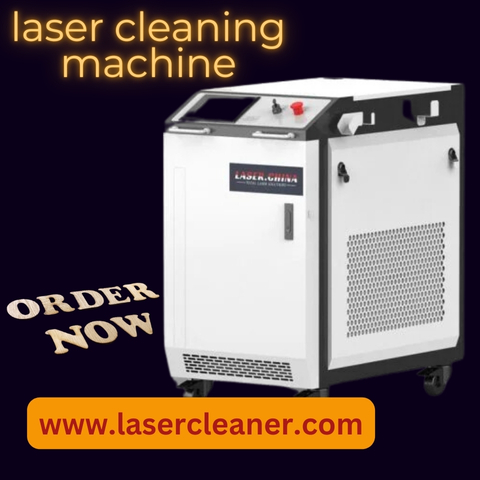
In today’s industrial environment, precision, speed, and sustainability define the success of every manufacturing process. One technology that continues to transform how surfaces are treated and contaminants are removed is the laser cleaning machine. Unlike conventional cleaning methods that rely on chemicals, abrasives, or manual labor, laser cleaning introduces a focused beam of light that removes rust, paint, grease, or oxidation with unmatched accuracy. This innovative process is now being adopted across multiple sectors, from automotive manufacturing and aerospace maintenance to cultural heritage restoration and power generation.
At its core, a laser cleaning machine functions by delivering a concentrated laser beam onto a surface, vaporizing unwanted layers without damaging the base material. The result is a clean, precise, and residue-free finish that requires no solvents or secondary treatment. This capability has turned laser cleaning into a preferred method for companies seeking efficiency, precision, and environmental responsibility in their operations.
The power of laser cleaning lies in its ability to adapt. Whether the objective is to remove rust from steel components, prepare metal surfaces for welding, or clean molds used in production lines, the laser cleaning machine can be adjusted for different materials and contamination levels. Operators can fine-tune parameters like beam intensity, pulse duration, and scanning speed to achieve the desired effect. This flexibility makes it a versatile tool suitable for both large-scale industrial applications and delicate restoration tasks.
In manufacturing facilities, one of the most common uses of a laser cleaning machine is surface preparation before welding or coating. A clean surface ensures stronger bonds and a higher-quality final product. The laser’s contactless process eliminates contamination risks associated with traditional cleaning materials, such as sandblasting media or chemical residues. Additionally, the machine’s precision allows for selective cleaning, meaning only the targeted areas are treated while surrounding zones remain unaffected.
Aerospace and automotive industries are at the forefront of adopting laser cleaning machines. Components like engine parts, turbine blades, and structural elements require strict cleanliness standards before assembly or coating. Manual or chemical cleaning often leads to inconsistencies or potential damage. Laser cleaning provides a non-abrasive solution that preserves the geometry and integrity of high-value components while delivering repeatable results. This reliability reduces rework and downtime, leading to improved productivity across production lines.
The same technology has also proven valuable in heritage conservation. Historical artifacts, sculptures, and monuments often accumulate layers of grime, pollution, or corrosion over centuries. Using a laser cleaning machine, conservators can delicately remove surface contaminants without harming the original substrate. The process offers controlled energy delivery that can be finely adjusted to the material’s sensitivity. As a result, laser cleaning has become a trusted technique for preserving artworks and architectural details that require a gentle yet effective touch.
The transition toward sustainable manufacturing practices has further accelerated the demand for laser cleaning machines. Since no chemicals or consumables are needed, there is minimal waste generation and zero secondary pollution. Workers are also less exposed to harmful substances, making the workplace safer and cleaner. Companies aiming to meet environmental regulations or green production standards now view laser cleaning as an investment in long-term compliance and corporate responsibility.
Another major reason behind the increasing popularity of laser cleaning machines is operational efficiency. The technology significantly reduces cleaning time compared to traditional techniques. The beam’s high energy density quickly removes surface layers, even from complex geometries or hard-to-reach areas. Furthermore, the process requires little to no maintenance once set up, making it ideal for continuous or automated production lines. As a result, businesses achieve both faster turnaround and lower operating costs.
The development of handheld and portable models has also expanded accessibility. Modern laser cleaning machines are designed for mobility and user convenience. Operators can perform cleaning directly on-site without disassembling large parts or moving heavy equipment. This is particularly useful in industries like shipbuilding, pipeline maintenance, and power plant operations, where surface treatment often needs to occur in confined or remote locations.
In terms of technology, the laser cleaning machine operates through several core mechanisms such as ablation, plasma generation, and thermal expansion. During ablation, the laser beam rapidly heats and vaporizes the contaminant layer, which is then ejected from the surface by micro-explosions or gas expansion. The underlying material remains intact because the laser wavelength and pulse energy are carefully calibrated. This level of precision control ensures consistent results and eliminates the risk of surface deformation.
From a business perspective, adopting a laser cleaning machine can provide a competitive edge. Manufacturers who integrate laser cleaning into their workflow often report improved process reliability, reduced consumable expenses, and better overall production quality. In addition, the system’s compatibility with automation means it can be seamlessly integrated into robotic arms or CNC systems, ensuring consistent and repeatable operations.
The technology continues to evolve rapidly. Recent advancements in fiber laser technology have made laser cleaning machines more energy-efficient and compact. Systems that once required large cooling units and complex setups are now available in sleek, user-friendly designs suitable for workshop or field use. These improvements, combined with the decreasing cost of laser components, make the technology more accessible to small and medium-sized enterprises that previously relied on manual cleaning methods.
Training operators to use a laser cleaning machine is also relatively straightforward. The intuitive control interfaces allow for real-time adjustments and monitoring. Parameters such as laser power, scanning path, and repetition rate can be optimized through digital touch panels, ensuring consistent performance across different cleaning projects. With minimal learning curve, technicians can operate the system safely and efficiently after basic instruction.
The laser cleaning machine has not only revolutionized industrial cleaning but also opened new pathways in surface engineering. The ability to control the texture and energy input of a surface at a microscopic level has applications beyond cleaning. Industries now explore its use in modifying surface roughness for better adhesion, creating micro-patterns for functional coatings, or preparing components for additive manufacturing. These innovations underline the growing role of laser technology in shaping the future of material processing.
Another critical factor contributing to its growing adoption is safety and environmental stewardship. Since the laser cleaning machine uses light rather than chemicals or abrasives, there are no toxic fumes, dust, or wastewater by-products. Properly enclosed systems can also collect and filter any vaporized particles, ensuring compliance with health and safety regulations. This aligns with the global movement toward cleaner, greener, and more sustainable industrial practices.
From automotive workshops to high-tech production lines, the laser cleaning machine continues to prove its value as a reliable and efficient tool for surface preparation. Its adaptability across materials—steel, aluminum, copper, titanium, composites, and even stone—makes it an all-round solution for modern maintenance and production needs.
Final Thoughts
The laser cleaning machine stands as a defining innovation in modern industry—one that bridges the gap between performance and sustainability. By combining precision, speed, and environmental responsibility, it replaces outdated cleaning methods with a process that is cleaner, smarter, and more efficient. As industries move toward automation and eco-friendly production, laser cleaning is not just an option—it is a necessity for those who want to stay ahead in a world where precision and sustainability go hand in hand.
RELATED POSTS
View all




Professional Tally Customization Services in India – Tailored for Your Business
October 21, 2025 | by IoT Development Company