


How Prism Shapes Light in Optics and Modern Industries
October 28, 2025 | by IoT Development Company
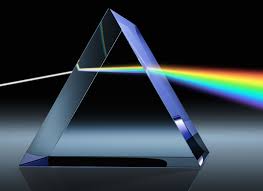
A prism is more than just a triangular piece of glass—it’s a fundamental optical element that manipulates light in ways critical to science, imaging, and modern technology. From splitting white light into a rainbow to aiding complex laser systems, prisms are at the heart of many optical applications we rely on daily.
In this article, we’ll explore what a prism is, how it functions, its types, and why it plays such a vital role in optics, engineering, and manufacturing today. Whether you’re in the optical industry or just curious about light behavior, understanding prisms reveals how precision optics power our modern world.
What Is a Prism?
A prism is a transparent optical component—usually made of glass, quartz, or acrylic—that refracts, reflects, or disperses light. Its unique geometry bends light at specific angles, changing its direction or separating it into its constituent colors.
The most familiar example is the triangular prism that disperses sunlight into a spectrum. However, in industrial and scientific applications, prisms serve far more advanced purposes such as light deviation, beam steering, polarization control, and wavelength separation.
How a Prism Works: The Science of Light Refraction
When light passes through a prism, it bends because it travels at different speeds through the medium. This process is known as refraction. Since each color of light has a different wavelength, each one bends at a slightly different angle, producing the distinct colors of the spectrum.
In technical terms:
-
The incident light enters one face of the prism.
-
The light slows down and bends inside the medium.
-
On exiting, it bends again—producing a spread of colors or a redirected beam.
This precise control of light direction is why prisms are widely used in cameras, microscopes, spectrometers, and even AR/VR optical modules.
Different Types of Prisms and Their Uses
1. Dispersing Prisms
These prisms, like the standard triangular prism, separate white light into multiple colors. They are essential in spectroscopy, where light is analyzed to study materials and chemicals.
2. Reflecting Prisms
Reflecting prisms, such as Porro prisms and roof prisms, redirect light paths using internal reflection instead of mirrors. They are common in binoculars, cameras, and laser systems because they provide compact designs and bright images.
3. Polarizing Prisms
These prisms split light into polarized beams—used in instruments like polarimeters and projection systems where controlling light orientation is crucial.
4. Beam-Splitting Prisms
Beam splitters divide light into two paths with specific intensity ratios. They’re widely used in optical sensors, interferometers, and imaging devices.
5. Right-Angle and Wedge Prisms
Used for image rotation, deviation, or beam alignment. These are common in industrial laser setups and optical instruments requiring precision angular adjustment.
Applications of Prisms in Modern Industries
1. Optical Instruments
Prisms are essential components in microscopes, telescopes, and cameras. They help manipulate light direction, correct image orientation, and improve brightness without distortion.
2. Laser and Photonics Systems
In photonics, prisms precisely steer laser beams and split wavelengths for calibration. Their durability and optical clarity make them ideal for laboratory and manufacturing use.
3. Spectroscopy and Material Analysis
By dispersing light, prisms allow scientists to analyze spectral lines, identify substances, and measure material properties with high precision.
4. Display and Imaging Technologies
Advanced systems such as projectors, AR/VR modules, and optical sensors rely on prisms for uniform image projection and efficient light redirection. The prism technology ensures better image clarity and color separation in these applications.
5. Telecommunications and Fiber Optics
In fiber-optic networks, miniature prisms control signal routing and alignment, helping maintain stable data transmission and reducing optical losses.
Why Optical Quality Matters in Prisms
The performance of a prism depends on its optical clarity, surface precision, and refractive index uniformity. High-quality optical glass or crystal ensures minimal scattering and distortion.
Manufacturers like ARVROptical produce prisms using advanced polishing and coating techniques to enhance durability, reflection efficiency, and wavelength accuracy. The right prism can significantly improve system performance—making it an essential investment for optical engineers and researchers.
Choosing the Right Prism for Your Application
When selecting a prism, consider:
-
Material: Glass, quartz, or sapphire depending on your wavelength range.
-
Coating: Anti-reflective or dielectric coatings for light efficiency.
-
Angle Precision: Determines accuracy in beam deviation and image alignment.
-
Size and Shape: Customized designs for specific optical systems.
Always source from reliable suppliers who understand precision optics and provide customized prism designs for professional and industrial needs.
Conclusion
A prism may look simple, but its role in optics is profound. From breaking light into colors to directing complex laser beams, it forms the foundation of countless optical technologies. Modern industries—from imaging and measurement to photonics and displays—depend on these small yet powerful components.
If you’re exploring high-quality prisms for professional use, visit ARVROptical’s to discover precision-engineered optical solutions designed for performance, clarity, and innovation.
RELATED POSTS
View all


The Future Builders Transforming Design Through Digital Expertise
November 3, 2025 | by IoT Development Company

High-Precision Industrial Joining with a Modern Fiber Welder Machine for Clean and Reliable Results
November 29, 2025 | by IoT Development Company

Manual Driving Lessons Welland | Trusted & Skilled Driving Support
November 11, 2025 | by IoT Development Company