

Revolutionizing Data Processing with Machine Learning at the Edge
December 6, 2025 | by IoT Development Company
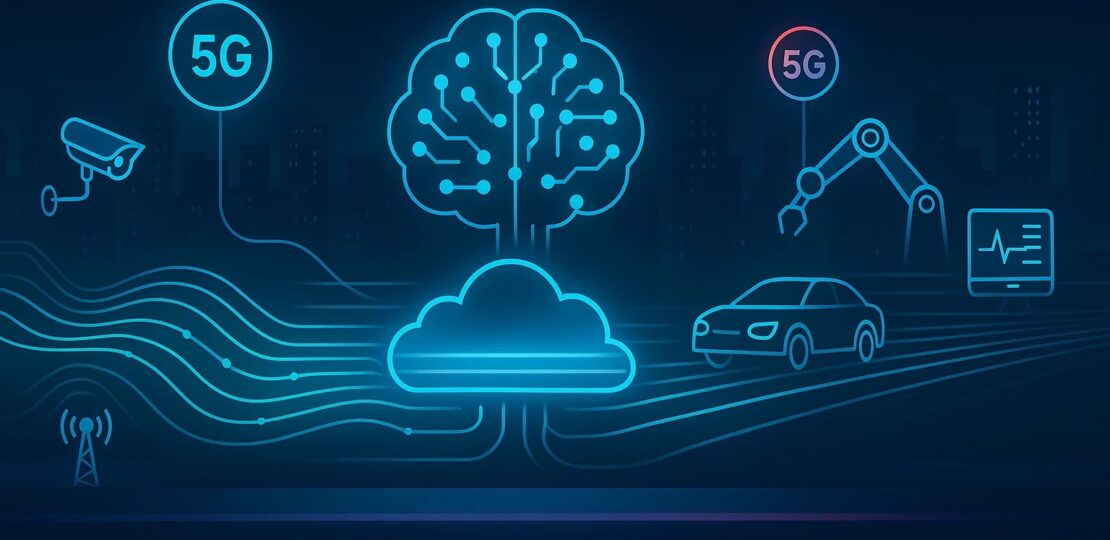
In the rapidly evolving world of technology, machine learning at the edge is emerging as a transformative force that redefines how data is processed, analyzed, and utilized. Unlike traditional cloud-based machine learning, where data is sent to centralized servers for processing, edge computing brings computation closer to the source of data generation. This shift enables devices and systems to make faster, smarter, and more autonomous decisions, creating new possibilities across industries.
Understanding Machine Learning at the Edge
At its core, machine learning at the edge involves deploying artificial intelligence models on devices that are physically closer to where the data is generated, such as smartphones, IoT sensors, industrial machinery, or autonomous vehicles. By performing computations locally rather than relying on remote servers, edge devices can process information in real time. This approach significantly reduces latency, enhances privacy by keeping sensitive data on the device, and lowers bandwidth costs associated with sending massive amounts of data to the cloud.
The fusion of machine learning with edge computing marks a paradigm shift. Traditional cloud-based AI solutions often suffer from delays, network dependency, and potential privacy risks. By bringing intelligence to the edge, organizations can overcome these limitations, allowing devices to respond instantaneously to dynamic conditions. For example, autonomous vehicles rely heavily on machine learning at the edge to analyze sensor data and make split-second decisions that ensure passenger safety.
Advantages of Machine Learning at the Edge
One of the most significant benefits of machine learning at the edge is the dramatic reduction in latency. In industries such as manufacturing, healthcare, and transportation, even milliseconds can make a difference between optimal performance and costly errors. Edge computing allows devices to interpret data and act without waiting for instructions from a central server, thereby improving responsiveness and operational efficiency.
Another crucial advantage is enhanced data privacy and security. Sensitive information, such as personal health data or financial transactions, can be processed locally on the device without transmitting it over networks that may be vulnerable to cyberattacks. This local processing aligns with regulatory requirements in various regions, ensuring compliance while maintaining high levels of security.
Furthermore, machine learning at the edge promotes bandwidth efficiency. With the exponential growth of IoT devices generating massive amounts of data daily, sending all this information to cloud servers for processing can overwhelm networks and increase operational costs. Edge computing minimizes data transfer by processing only the necessary insights locally and sending summary results or critical information to central servers when needed.
Real-World Applications Transforming Industries
The integration of machine learning at the edge is reshaping numerous sectors. In healthcare, wearable devices and medical sensors analyze patient data locally to detect anomalies, monitor vital signs, and provide timely alerts to medical professionals. This proactive approach can significantly improve patient outcomes while reducing hospital visits and operational costs.
In the industrial domain, edge-powered machinery can monitor production lines in real time, predicting equipment failures before they occur and optimizing maintenance schedules. Such predictive maintenance not only reduces downtime but also prolongs the life of machinery and enhances overall productivity. Similarly, smart cities leverage edge devices to manage traffic flow, monitor environmental conditions, and ensure public safety, creating a more efficient and sustainable urban environment.
Autonomous vehicles exemplify another crucial application. Self-driving cars rely on machine learning at the edge to process data from cameras, LiDAR sensors, and GPS in real time. This capability enables vehicles to make instantaneous decisions, such as avoiding obstacles, adjusting speed, and navigating complex environments, without depending solely on cloud-based instructions.
Challenges and Considerations
Despite its numerous benefits, deploying machine learning at the edge is not without challenges. Edge devices typically have limited computing resources compared to cloud servers, which requires AI models to be optimized for efficiency without compromising accuracy. Engineers and developers must balance model complexity with hardware constraints, ensuring reliable performance under diverse conditions.
Additionally, maintaining and updating machine learning models across a network of distributed edge devices can be complex. Organizations must implement robust strategies for model deployment, monitoring, and continuous improvement to keep the AI systems effective and relevant. Security is another critical consideration, as edge devices may be more vulnerable to physical tampering or localized cyber threats than centralized servers.
The Future of Machine Learning at the Edge
The future of machine learning at the edge promises even greater integration with emerging technologies. Advances in microprocessors, neural network optimization, and energy-efficient hardware will enable more sophisticated AI models to run directly on edge devices. This evolution will empower industries to harness real-time intelligence at unprecedented scales, unlocking new opportunities in automation, personalized services, and environmental monitoring.
As the demand for instantaneous data insights grows, edge AI will play a pivotal role in shaping the next generation of connected devices. From smart homes and autonomous transportation to industrial automation and healthcare innovation, the combination of machine learning and edge computing will redefine how we interact with technology, making systems faster, smarter, and more resilient.
Conclusion
Machine learning at the edge represents a revolutionary shift in how data is processed and utilized. By bringing intelligence closer to the source, organizations can achieve real-time responsiveness, enhance privacy, optimize bandwidth usage, and unlock innovative applications across diverse sectors. While challenges remain, ongoing advancements in AI models, hardware, and deployment strategies are steadily overcoming these obstacles. The future of edge AI is bright, offering the promise of a smarter, more efficient, and increasingly autonomous world where technology adapts seamlessly to our needs.
RELATED POSTS
View all

Revolutionizing IT Hardware: The Power of Wireless Products
December 6, 2025 | by IoT Development Company
IoT Security: Protecting Our Connected World
December 6, 2025 | by IoT Development Company

Efficient Cable Management System in Abu Dhabi Enhancing Safety and Organization
December 6, 2025 | by IoT Development Company
